




Assessing “Cognitive Warfare”
Frank Hoffman, Small Wars Journal
The enduring art of warping an adversary’s decision-making in war:
To the historically oriented, the fight for the minds of decision-makers and noncombatants does not expand the battlespace, but it does expand or at least challenge long-held Western conceptions about war. Those encultured with violent visions, per Clausewitz, will struggle with this concept. The acolytes of the Prussian sage think in terms of physical violence as the essence of war and overlook his description of war as a clash of wills, as well as his discussions about rational and irrational factors in human conflict.

Gordon Wood Remarks: 2025 Irving Kristol Award Presentation
Gordon Wood, The American Enterprise Institute
Historian Gordon Wood on what makes American exceptional:
The United States is not a nation like other nations, and it never has been. There is at present no American ethnicity to back up the state called the United States, and there was no such distinctive ethnicity even in 1776 when the United States was created. Many European countries, Germany, for example, were nations before they became states. Most of the European states were created out of a prior sense of a common ethnicity or language. Some of these European states, the Czech Republic, for example, are new, created in the twentieth century, and are certainly newer than the 249-year-old United States. Yet these European states, new as they may be, are undergirded by peoples who had a preexisting sense of their own distinctiveness, their own nationhood. In the United States the process was reversed. Americans created a state before they were a nation, and much of American history has been an effort to define the nature of that nationhood.

History Should be Taught to all Children up to the Age of 16
Foundation for the History of Totalitarianism
British youth do not know their own country’s history. Thank the British education system:
History helps people to understand why the world is the way that it is. Institutions and ideas like Parliament, democracy, a constitutional monarchy and religious tolerance do not make sense without a historical awareness of how they have come to be. In a country as old as Britain, the structure of government has evolved over time and has been the resolution of conflicting forces. History also equips citizens and voters to make better decisions. The past is a back-catalogue of successes and failures that people can draw on in the present. A citizen with a secure knowledge of the past is much more likely to be able to effectively assess the costs and benefits of declaring war, replacing an institution or forging an alliance with another country.
As We Await the Pentagon’s Posture Review, Here’s One Country We Should Keep Troops In
Luke Coffey, Defense One
The American interest in securing NATO’s northern flank:
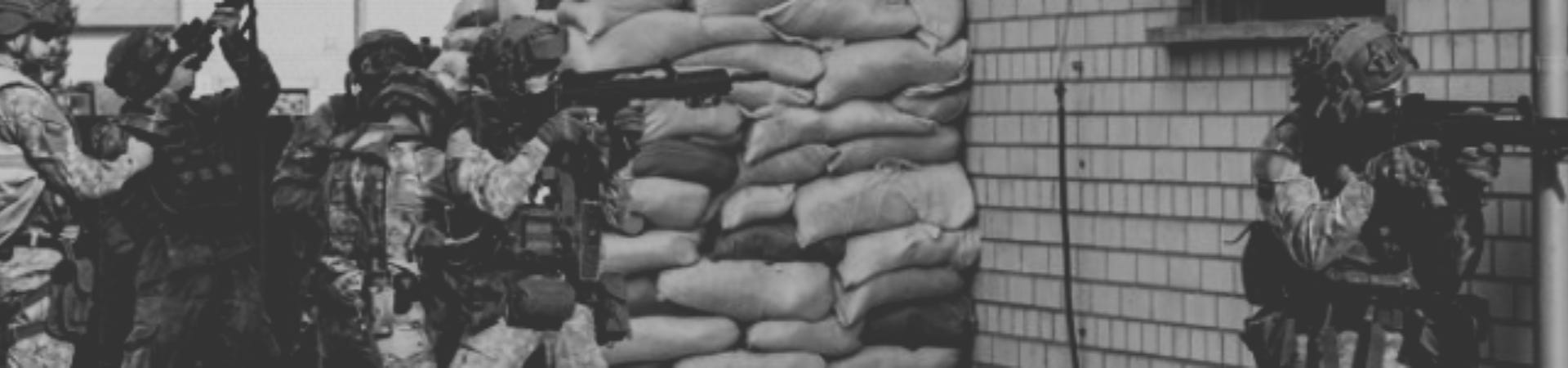
Having this foreign presence in the Baltics makes sense for both regional and transatlantic security. The Baltic states are geographically vulnerable inside NATO—vulnerable in strictly military terms and, in a crisis, on whether the alliance has the military capability and political will to fully live up to its Article 5 security guarantees. Geography works against reinforcement: Lithuania connects to the rest of NATO only through the narrow Suwałki Gap with Poland, while the militarization of Russia’s Kaliningrad exclave and Belarusian territory complicates any rapid flow of forces by air or by sea.
Really helpful post. Frank makes “cognitive” more than persuasion by focusing on how people process information and decide under uncertainty, not just what they believe.
The targets-and-effects matrix is the most practical part: it keeps the term from becoming a catch-all and forces clarity about what is being targeted and what “success” looks like, including resilience.
It also maps cleanly to No Shots Fired: win below the threshold by creating confusion and delay so the other side self-deterrs while facts on the ground keep shifting.
Thanks for sharing!